



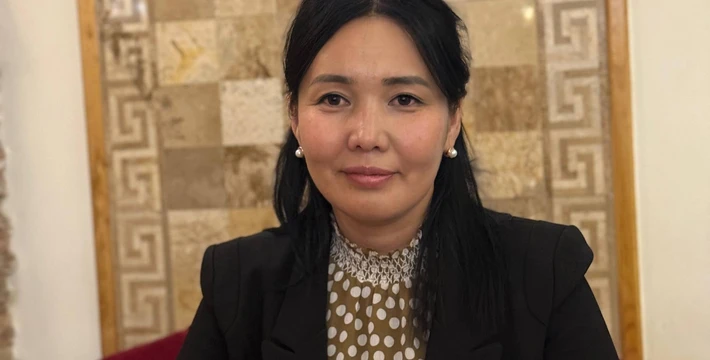
Women in export: how the project helped Bunisa build a successful business
Women in business face many barriers, especially in the export sector. Bunisa, the head of Global Agro, a company that exports nuts from Kyrgyzstan, has come a long way to prove her competence and gain recognition. When she was just starting out, her requests and ideas were not taken seriously – neither by local authorities nor by the business community. As a petite woman, she felt it was harder for her to make her way in a world traditionally dominated by men. She strove to develop her business, studied, sought out clients, but faced bureaucratic barriers and a lack of resources.
She initially worked as an intermediary, helping farmers find customers to sell their nuts. She soon became a co-founder of Global Agro. When she joined the company, its annual turnover was around 50 million soms, but thanks to her efforts and clear approach to business, it grew significantly. However, key challenges remained: finding and retaining customers, ensuring high quality standards, and implementing sustainable solutions in the supply chain.
How did the project help this young, ambitious woman and her business? The Trade Facilitation in Central Asia project, funded by the Government of Finland, aims to support Central Asian countries in promoting inclusive and sustainable growth through the development of green value chains.It contributes to the development of a sustainable and competitive economy, taking into account gender issues and new challenges caused by COVID-19.
One of the project's areas of focus—supporting exporters—played a key role in transforming Bunisa's business. The project aims to increase the volume of export contracts and improve the business environment at the national level.
As a result:
1. Bunisa was able to participate in specialized training courses that were previously unavailable to women entrepreneurs.
2. The project provides the opportunity to purchase equipment on a grant basis. As part of its application, Global Agro will receive a solar-powered dryer, which will reduce product quality losses and increase its competitiveness.
3. Cooperation with the departments that issue permits helps to remove bureaucratic barriers that complicated exports.
4. Improvements in the business environment have increased the confidence of international partners and facilitated the processing of export documents.
Today, Global Agro successfully exports nuts to Turkey, Azerbaijan, Uzbekistan, and Albania. The company continues to develop by introducing environmentally friendly technologies and supporting local farmers by providing them with access to modern drying facilities. This not only improves product quality but also increases the income of the rural population, especially in regions where nuts are one of the key sources of income. The lack of drying equipment available to farmers affects product quality. Since nuts are harvested raw, without proper drying, the product can quickly spoil.
Bunisa demonstrates through her own example that women can achieve success in business if they receive support and opportunities for growth.
“It's never too late to start your own business. The main thing is to believe in yourself and not be afraid to try,” she says. She inspires other women entrepreneurs not to be afraid to start their own businesses and to believe in themselves. According to her, family support and access to financial resources are critical for women. Thanks to these projects, society has begun to recognize these issues and work to address them.
Bunisa's story is an example of how determination, competent support, and sustainable business solutions can not only change one person's life, but also give impetus to the development of an entire industry.